
The Real 2026 Price of a New Roof in Los Angeles (Before You Get Lowballed)
Citium Roofing Solutions ·
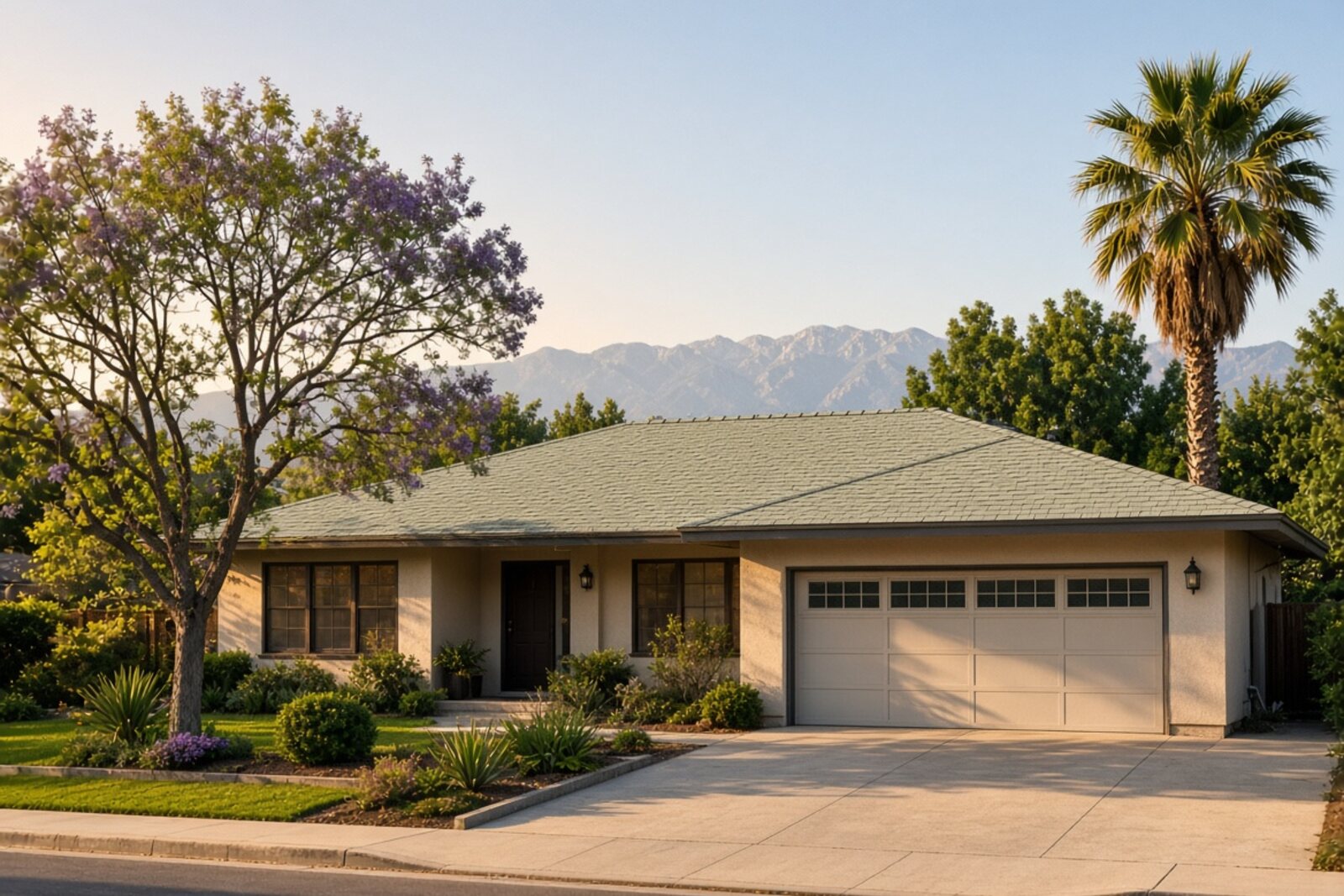
A typical San Fernando Valley ranch after a cool-roof architectural shingle replacement — the job most Mission Hills owners actually buy.
Search “roof replacement cost Los Angeles” and you will get five different averages before lunch. That is not because the internet is broken. It is because Los Angeles is not one roofing market. A 1,600-square-foot ranch in Mission Hills does not price like a steep tile house in the Hollywood Hills, and a “$7,000 new roof” posted in a Facebook group is almost never the same scope as a permitted tear-off.
This is the 2026 number set Citium Roofing uses when a San Fernando Valley owner asks what they should budget before anyone walks the attic. For a firm quote on your house, start with a free on-site estimate.
The short answer
For a typical 1,800–2,200 square foot single-family home in the Valley or central Los Angeles, a full tear-off and replacement in 2026 usually lands here:
| System | Typical installed range | What you are buying |
|---|---|---|
| Cool-roof architectural shingles | $13,000 – $24,000 | The most common Valley replacement. Title 24–capable product, 25–30 year design life in SoCal sun. |
| Concrete tile (re-tile or new) | $22,000 – $48,000 | Heavy, Class A, 40–50+ years if the underlayment is redone correctly. |
| Clay barrel tile | $30,000 – $60,000+ | Spanish and Mediterranean stock. Labor and breakage drive the number. |
| Standing-seam metal | $22,000 – $50,000 | Long life, high reflectance, strong fire story. More upfront. |
| TPO / flat membrane | $12,000 – $28,000 | Low-slope duplexes, additions, mid-century flats. Seams and flashing decide the lifespan. |
Citywide, many 2026 guides cluster around $8–$12 per square foot installed for composition shingles — about 25–40% above a generic U.S. average because of L.A. labor, disposal, and code. Treat any bid under $6 per square foot for a permitted tear-off as a document to interrogate, not a win.
What actually moves the price on a Los Angeles house
1. Squares, not floor area
Roofers price in squares (100 square feet of roof surface). A 2,000 square foot house is not a 20-square roof. Pitch, hips, valleys, and overhangs add surface. A modest Mission Hills ranch might be 22–28 squares. A chopped-up two-story in Granada Hills can be 35+.
2. Tear-off vs. overlay
California generally limits you to two layers. If you already have two, overlay is illegal, not “optional.” Overlay is cheaper this month and more expensive the year the leak shows up. Citium Roofing prices tear-off as the default on roof replacement work.
3. What is under the roof
Sun-baked Valley decking often needs sheet replacement. A fair contract lists a per-sheet price for bad plywood so you are not held hostage on day two. Skip that line and the low bid was a trap.
4. Access and neighborhood
Flat Valley lots are the cheap version of L.A. Hillside staging, narrow streets, HOA dumpster rules, and two-story work add labor. Westside and foothill premiums of 10–25% over a Mission Hills ranch are normal.
5. Fire-zone assemblies
If the house sits in a Very High Fire Hazard Severity Zone, you are not just buying shingles. You are buying a Chapter 7A assembly: Class A covering, listed underlayment, ember-resistant vents. Read the fire-zone guide.
6. Permits and disposal
A City of Los Angeles reroof goes through LADBS. Express permits are common for standard residential reroofs; fees often land in the low hundreds to around a thousand depending on valuation. Dump fees for a full tear-off are real money. Both belong in the bid.
What a complete bid includes (and what cheap ones cut)
- Tear-off of existing covering to the deck
- Haul-off and legal disposal
- Decking repair allowance, priced per sheet
- Synthetic underlayment (and ice-and-water at valleys / penetrations)
- New pipe boots, drip edge, valley metal, step flashing
- A named cool-roof product with a CRRC ID if you want the LADWP rebate
- Ventilation that matches the attic, not whatever was there in 1998
- LADBS permit and inspections
- Manufacturer + workmanship warranty in writing
If the quote is one line — “new roof $11,900” — you do not have a quote. You have a conversation starter. See how to read a California roofing contract.
Hidden costs L.A. owners forget
- Decking. $60–$120+ per 4x8 sheet installed is a common local range when dry rot shows up.
- Skylights. Reseal vs. replace. Old plastic bubbles fail the week after a reroof if you ignore them.
- HVAC stands and satellite leftovers. Flat and low-slope jobs pay for this.
- Solar. Removal and reinstall is a separate trade. Budget it if panels are already up.
- Painting fascia / gutters. Not roofing, but the house will look unfinished if you skip it.
Can insurance or a rebate cut the check?
Homeowners insurance in California generally pays for sudden damage (wind, fire, fallen tree), not “it got old in the sun.” After the last few years of carrier tightening, many policies are Actual Cash Value on older roofs. Do not count on a wear-and-tear claim to fund a reroof.
What can cut the net cost: a qualifying cool roof plus the LADWP Consumer Rebate Program at $0.20 or $0.60 per eligible square foot over conditioned space, if the product’s 3-year SRI and the invoice paperwork line up. On a 2,000 sq ft eligible surface that is $400–$1,200 — not the whole roof, but it is real money.
How to use three bids without getting played
- Same scope on all three: tear-off, product name, underlayment, flashing, permit, decking rate.
- Ignore the lowest number until you know what it deleted.
- Verify the CSLB C-39 on cslb.ca.gov. The name on the license must match the name on the contract.
- Down payment cannot exceed $1,000 or 10%, whichever is less on a California home-improvement contract.
When you are ready for a number tied to your actual roof — not a national calculator — call Citium Roofing Solutions or book the inspection from Mission Hills. We price Valley and Los Angeles work the same way: written, permitted, no mystery allowances.